What’s Inside Our Themed Learning Packs for Home Education
Mar 31, 2026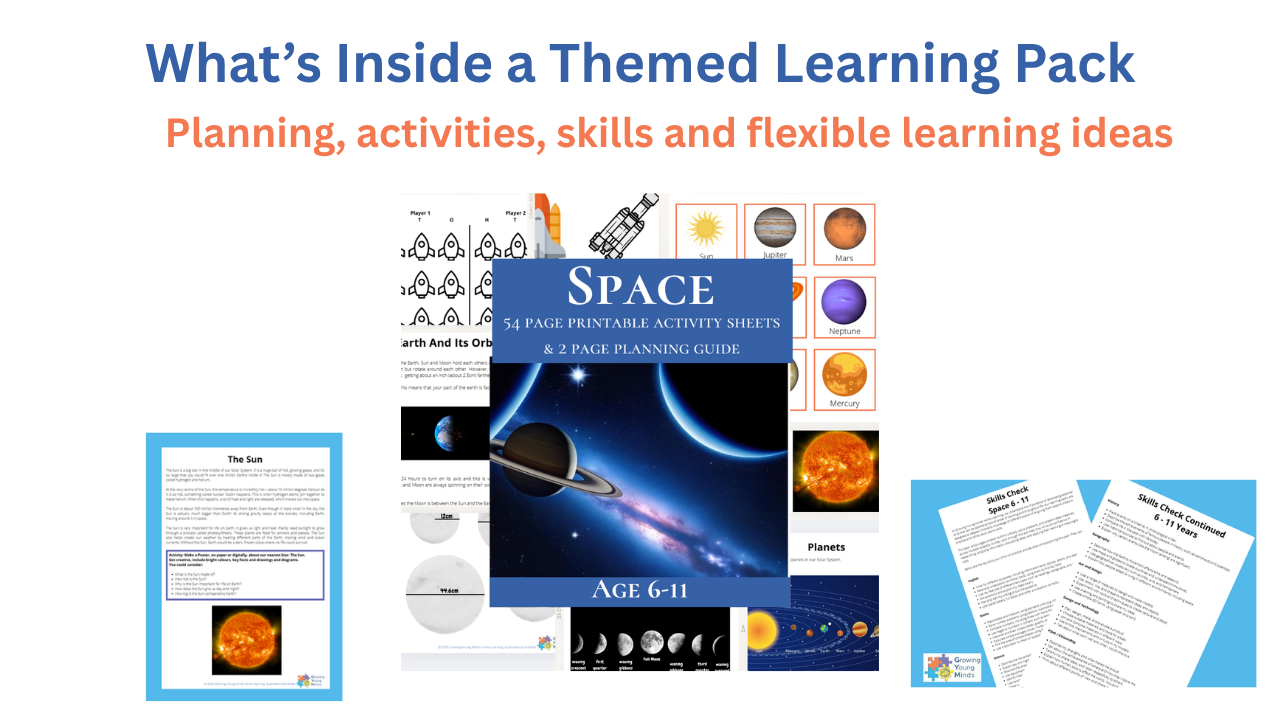
What’s Inside Our Themed Learning Packs for Home Education
In 2019, I started Growing Young Minds Home Learning. These were fun learning packs designed to help home education families connect ideas together through one theme.
Many parents loved the idea of themed learning but were not always sure how to bring everything together in a way that felt clear and manageable.
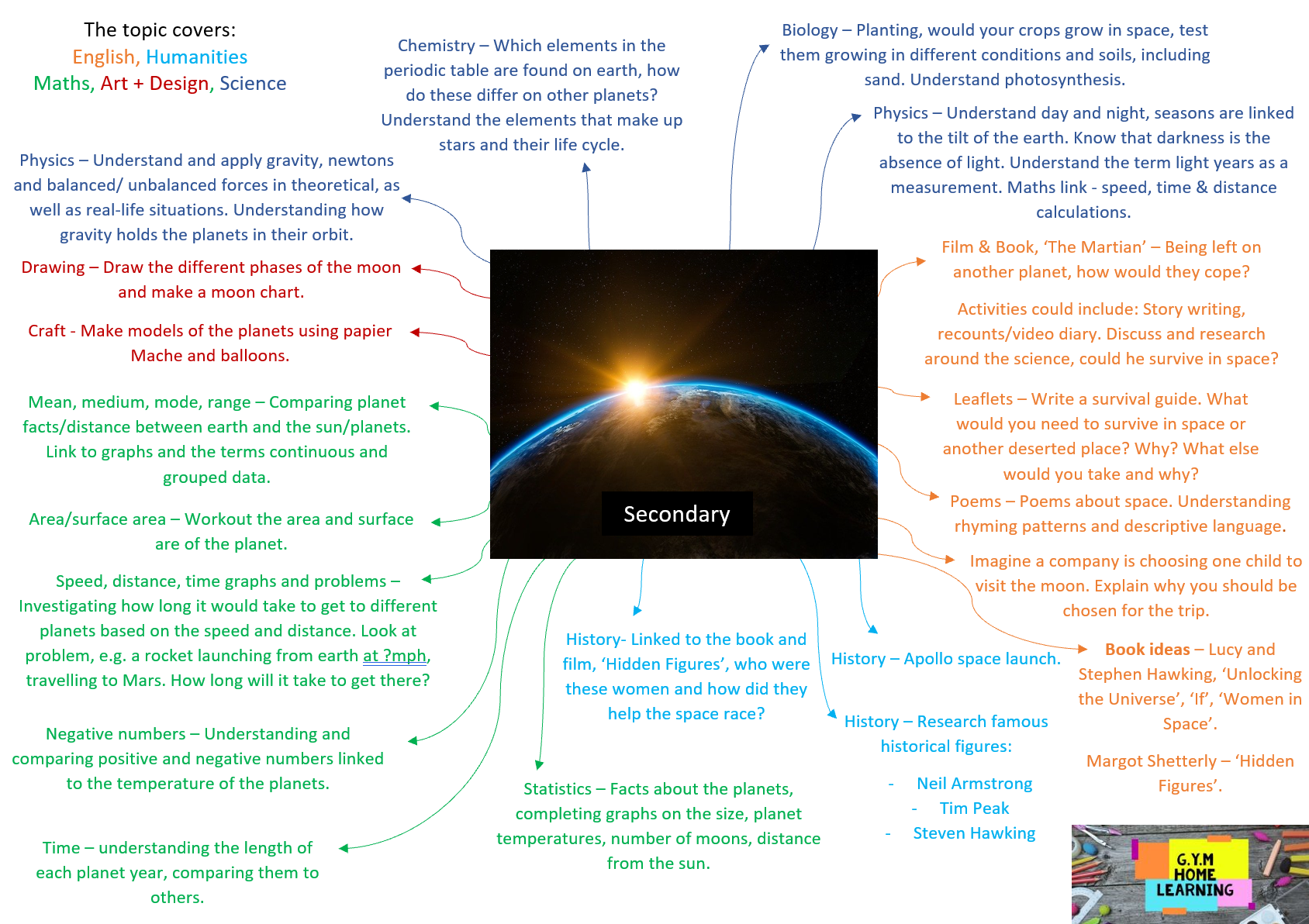
They originally looked like a mind map
.
I worked closely with the community, giving away plans and asking for feedback. Over time, it became clear that these plans were a real support. They helped parents connect ideas, gave them a starting point, and saved hours of research time.
We continued to develop the plans so that now they are over two pages and have key information, discussion questions and different ideas for lots of subjects.
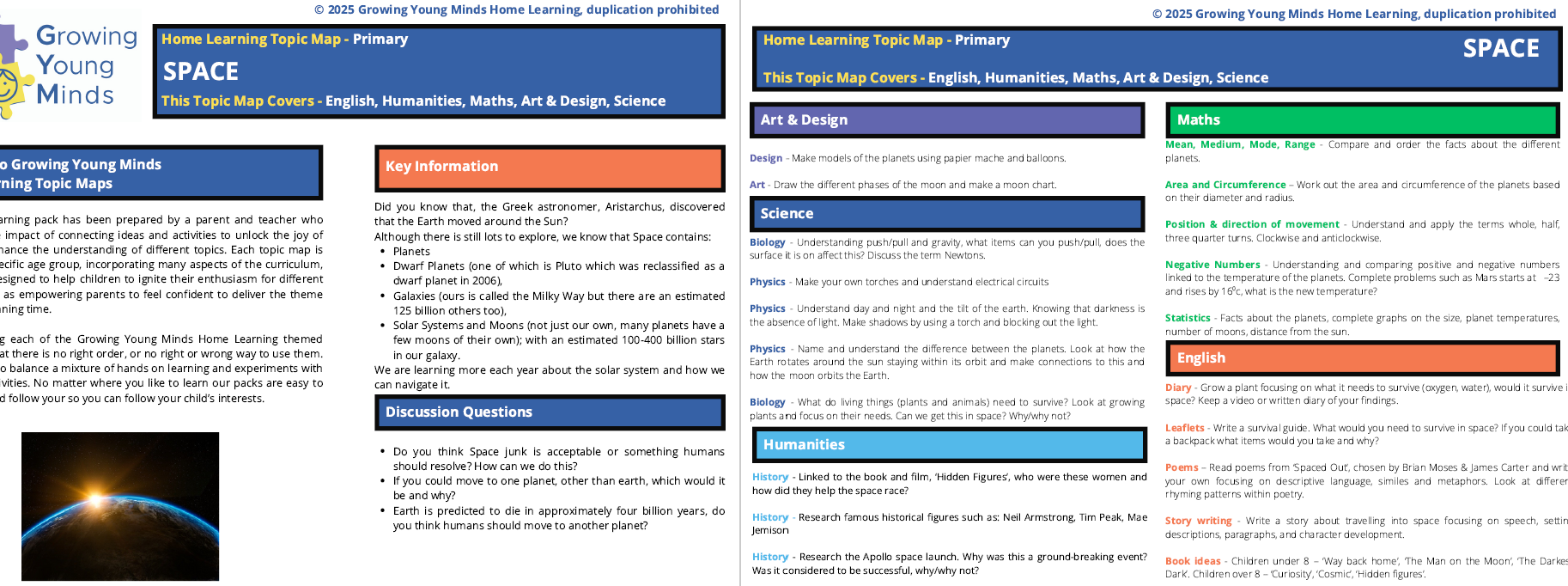
However, parents still needed to research and create the activities themselves.
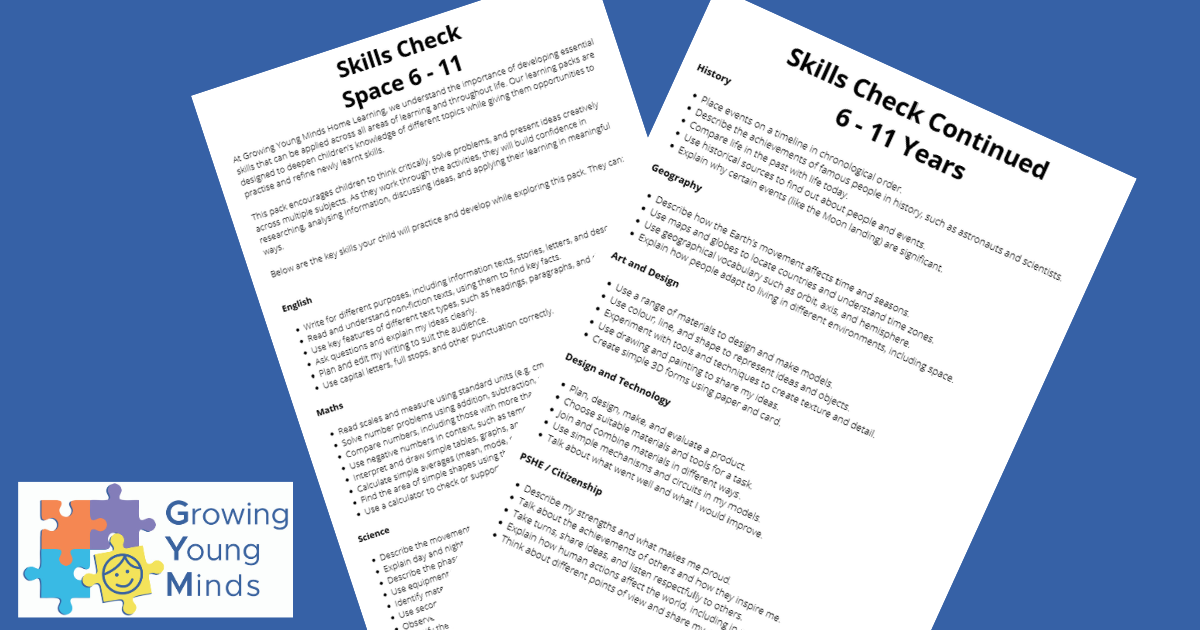
As we continued learning and adapting to create the best possible resources for families, we began developing activity sheets and ideas to sit alongside the plans. Today, we also include skills pages so you can see, highlight and discuss the learning in a clear and structured way.
What is included in a themed pack
Our resources include two different types of packs.
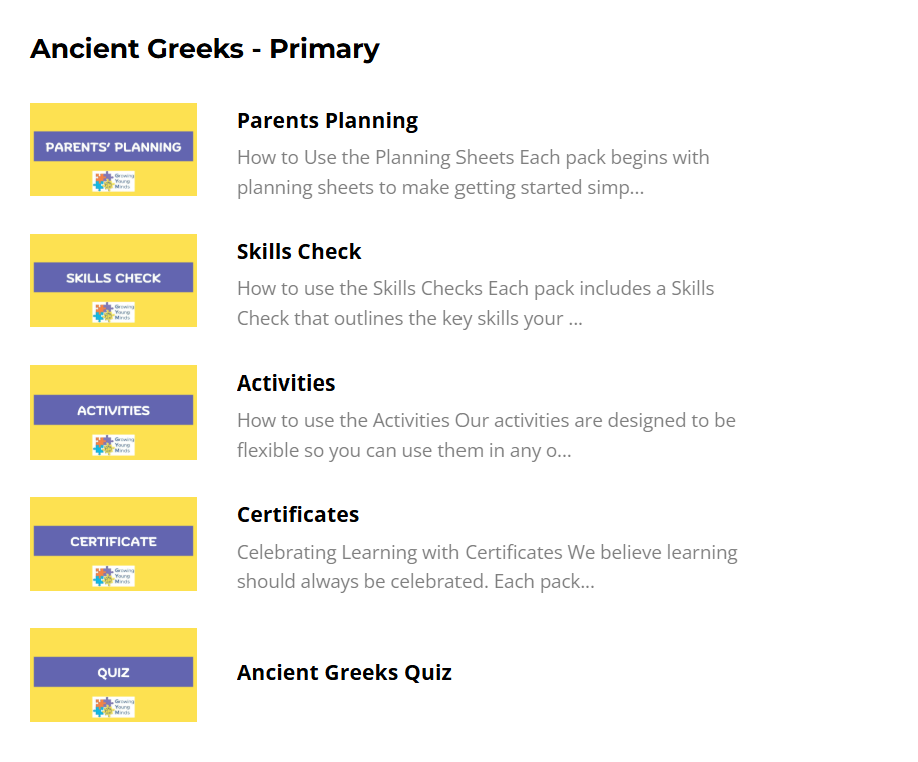
We have mixed age planning packs aimed at children aged 8 to 13. These include topics such as Autumn, Spring, Home Front and Bears. These packs include a range of activities, skills checks, a certificate and a quiz, giving you a flexible starting point across subjects.
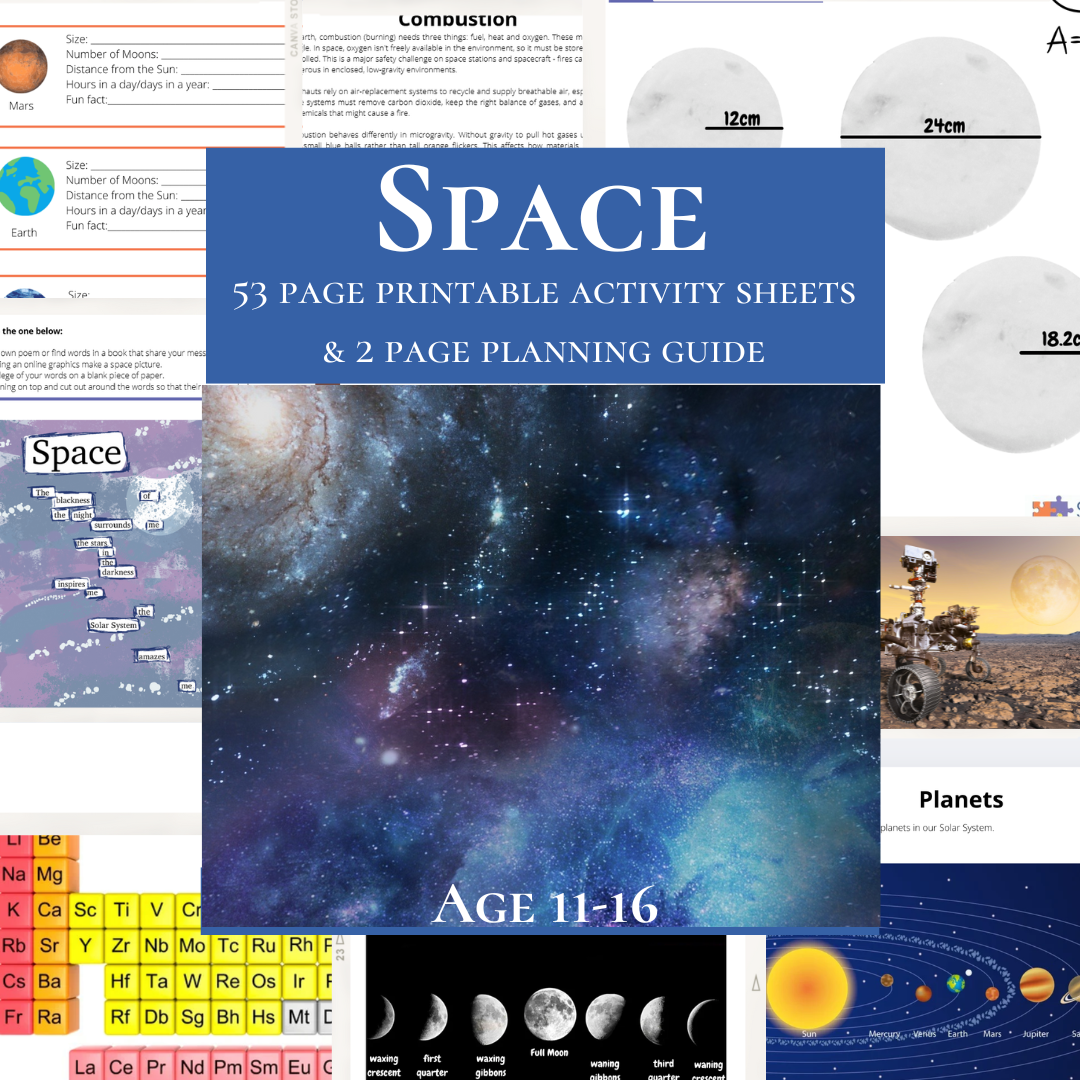
We also have packs aimed at children aged 6 to 11, and those working closer to Secondary level aged 11 to 15.
Within these, we provide planning ideas to give you a clear overview of the topic, along with background information and discussion questions to get everyone thinking. You can see the direction of learning before you begin.
Each pack also includes the key skills covered, helping you track and talk about learning as you go.
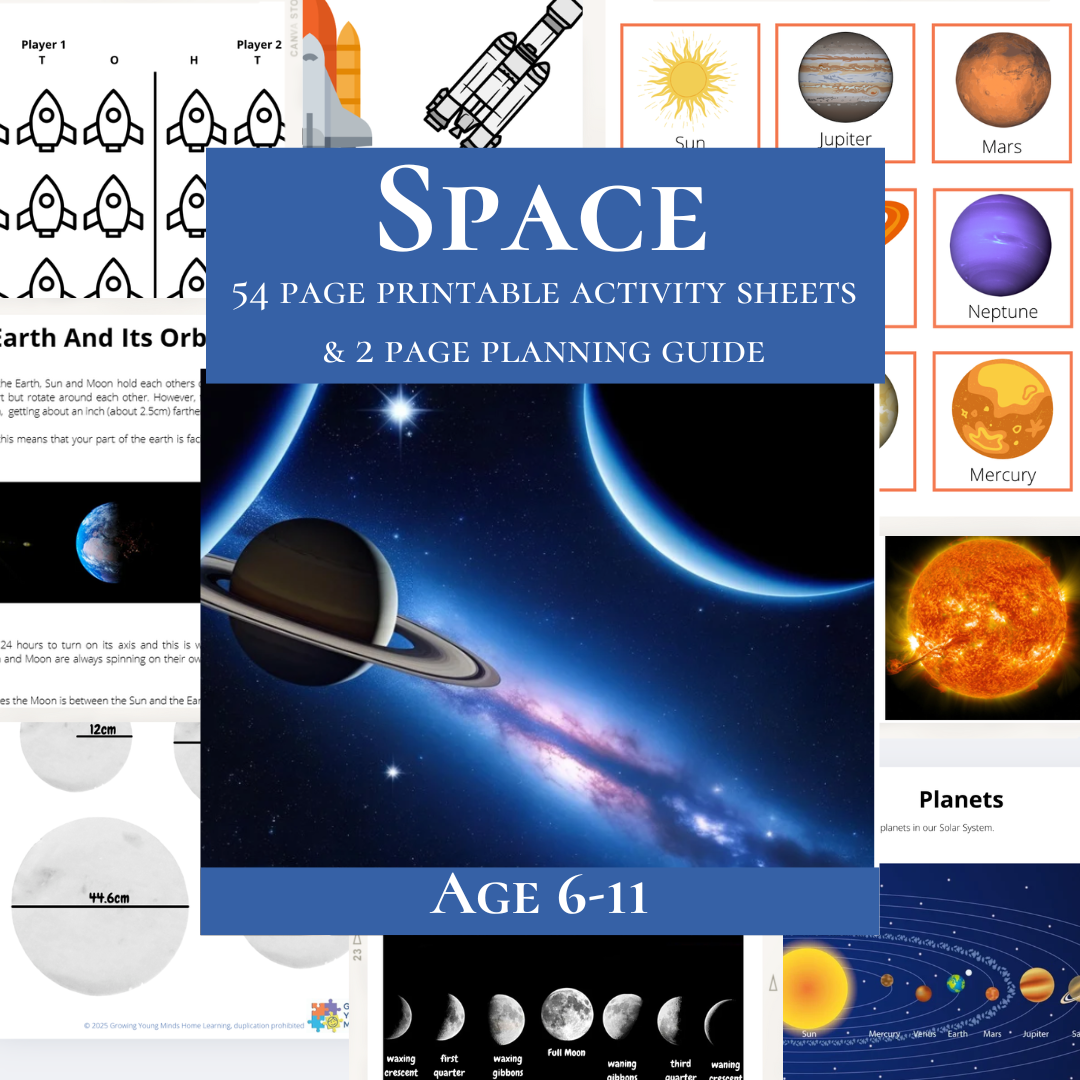
The activity sheets can be printed and used as worksheets, or adapted. You can take the ideas, images and support within them and bring the learning to life in a way that suits your child.
The number of pages varies, but many packs include 40 or more activities and ideas that bring together science, English, maths, history, geography, art and design.
We also include celebration certificates so you can recognise the learning completed together, and a topic quiz to revisit knowledge, learn more, and consolidate the theme.
They include:
• hands on practical activities
• art and design ideas
• science investigations
• links to books and websites to explore further
• images and direct questions to support thinking
This gives you both structure and flexibility. You have a clear starting point, with the freedom to follow your child’s interests.
Everything is designed so you can get started quickly, without needing to spend hours planning or researching beforehand. All of this is ready to use, so you can begin straight away or dip in and out as it suits your week.
This means you are not starting from scratch, you have a clear structure to follow while still keeping the flexibility to adapt learning to your child.
Adapting learning to suit your child
We know that every child is different. Some children like the structure of an activity and a sheet to work from, while others prefer a more open approach.
Our resources are designed to be adaptable.
You might begin with a paper based activity that asks your child to research a person or an animal and record their learning. Instead of completing it on paper, you could cut up images and place them on the wall, a large sheet of paper or the kitchen table. Together, you can look at the images and names, choose one, and explore it further.
This could involve:
• researching online or using books
• watching a documentary
• visiting a museum, zoo or farm
Children can then present their learning in a way that suits them. This might be through drawings, leaflets, longer pieces of writing, or bullet points with key facts.
You can read more about this approach in our blog on learning without worksheets. - Learning without worksheets.
Why cross curricular learning matters
The skills children develop through themed learning go far beyond one subject.
They are learning to:
• use technical vocabulary
• write with an audience in mind
• interpret and use historical information
• present timelines
• understand human impact and how the world changes over time
These are skills that can be revisited across different topics, helping children build confidence and depth in their learning.
Supporting parents alongside the packs
Alongside the packs, we are continuing to develop training videos for parents. These are designed to support you in understanding how to use the resources, how to approach themed learning, and how to adapt activities for your child.
We are also beginning to include more critical thinking opportunities within our resources. These help children question, explore ideas more deeply and make connections across what they are learning.
Why this approach works
The world does not exist in single subjects.
Nature does not work in isolation. Plants, animals and environments depend on each other. Families rely on a range of skills and contributions. Jobs require multiple skills working together, not one repeated task.
Learning should reflect this.
Why would we only write in English without understanding the science behind what we are learning? Why study a place without understanding how people live there, how to read a map, or how the environment shapes daily life?
Themed learning allows children to make these connections. It helps them join ideas together, build understanding, and develop confidence in how they learn.
Our packs are designed to support this. They help you connect ideas, save time, and feel confident that your child is developing both knowledge and skills in a meaningful way.
Using packs with mixed ages
The packs can be used flexibly across different ages.
You can look through the pack together before printing anything, or choose not to print at all. You might select a starting point based on your child’s interests. This could be a Maths task, a discussion question, a science investigation or something they have not explored before.
Children of different ages can approach the same theme in different ways. One may focus on writing and detail, while another explores ideas through building, discussion or visual work. They are still connected through the same topic.
Following your child’s pace
These activities might take an hour, a day, or longer.
We often find that when learning is led by a child’s interests, they stay engaged in a topic for longer than expected. Following their pace can lead naturally to new questions and ideas.
Learning may happen at home, outside, or throughout the day. It might be a conversation in the car, or a moment where you notice your child researching something independently.
Explore the packs
If you would like to see how this works in practice, you can explore the packs and membership here:
Try Our Resources
Join our mailing list to receive and not only will you the latest news and updates from our team.
You can also download our mini-pack on 1000 hours outdoors.